
Positions and Spots
How to read the Positions and Spots tabs in BluffLog analytics: bb/100 and preflop frequencies for every seat, winrate by spot type and by quick spot, and a one-click jump to a spot's hands.
Two analytics tabs answer the question “where”. Positions breaks the result and preflop frequencies down by seat, Spots by situation in the hand. Both are computed from the filters you have applied and exist in cash and in tournaments alike.
Positions
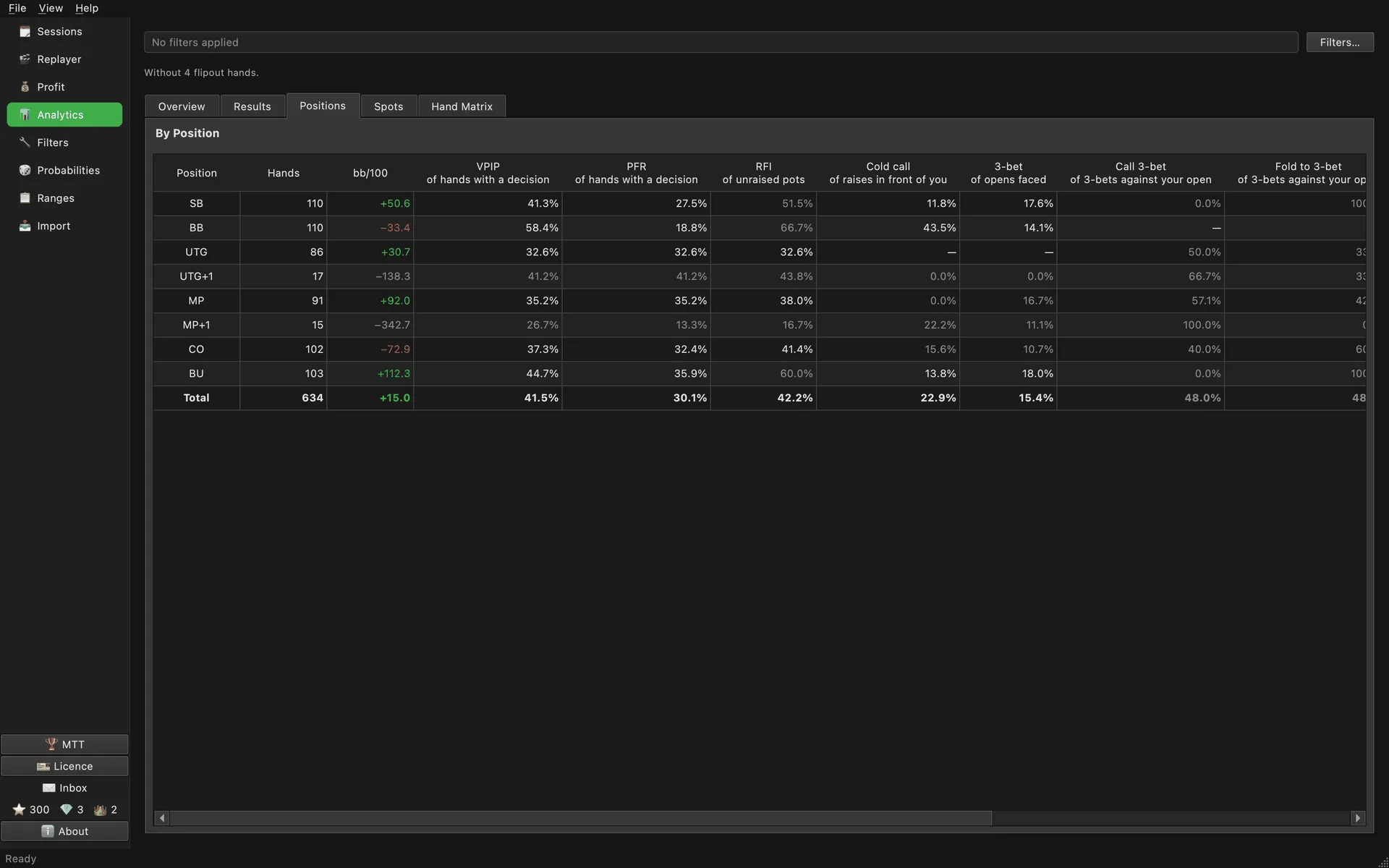
- Hands and bb/100 for every seat, plus a Total row. Cash adds a Net ($) column.
- Preflop frequencies carry their base in the header itself: VPIP and PFR are “of hands with a decision”, RFI is “of unraised pots”, 3-bet is “of opens faced”, calling and folding to a 3-bet are “of 3-bets against your open”. Hover over a header for the formula. Further right, past the scroll, are the postflop columns.
- A grey number rests on fewer than 50 hands or opportunities. It is shown, and the hover hint names the sample and says it is too few to draw a conclusion. A dash appears only where there was no opportunity at all.
Spots
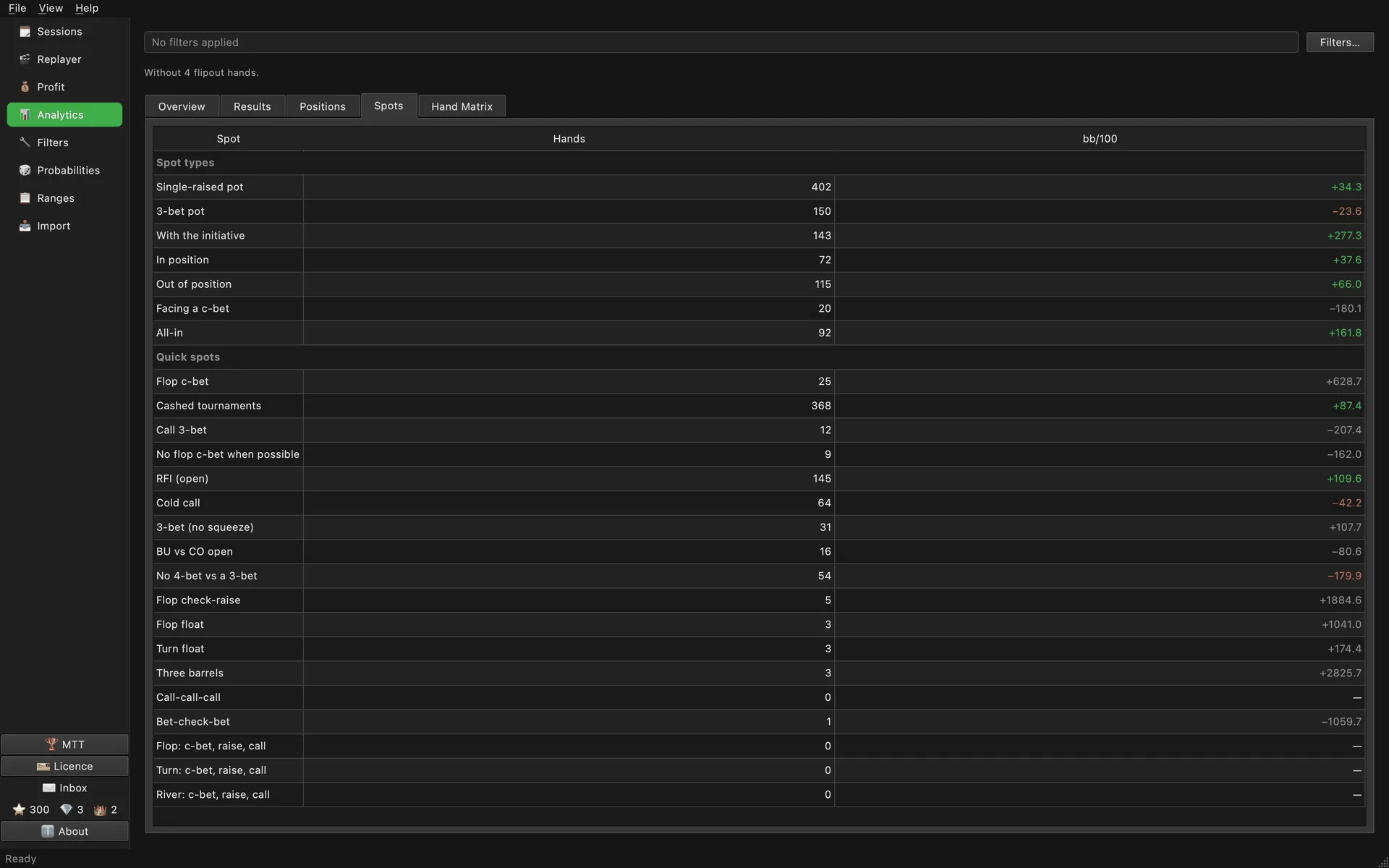
The table has two groups:
- Spot types: single-raised pot, 3-bet pot, with the initiative, in position and out of position, facing a c-bet, all-in.
- Quick spots: every quick spot from the Filters page except hidden ones, in the order of its card.
Each row is the applied filters plus the row’s own values. Narrow the sample with a filter, to one stake or one period for instance, and the whole table is recounted on it. Clicking a header sorts the rows within their groups: descending, ascending, then back to the original order.
Clicking a row opens exactly those hands. The row’s values are set on top of your filters and the hand list opens. So that the list is as long as the number in the row, the app adds two explicit filters: Hold’em only and, in tournaments, no flipout hands, which analytics leaves out as well. Their chips show on the filter bar and come off like any other.
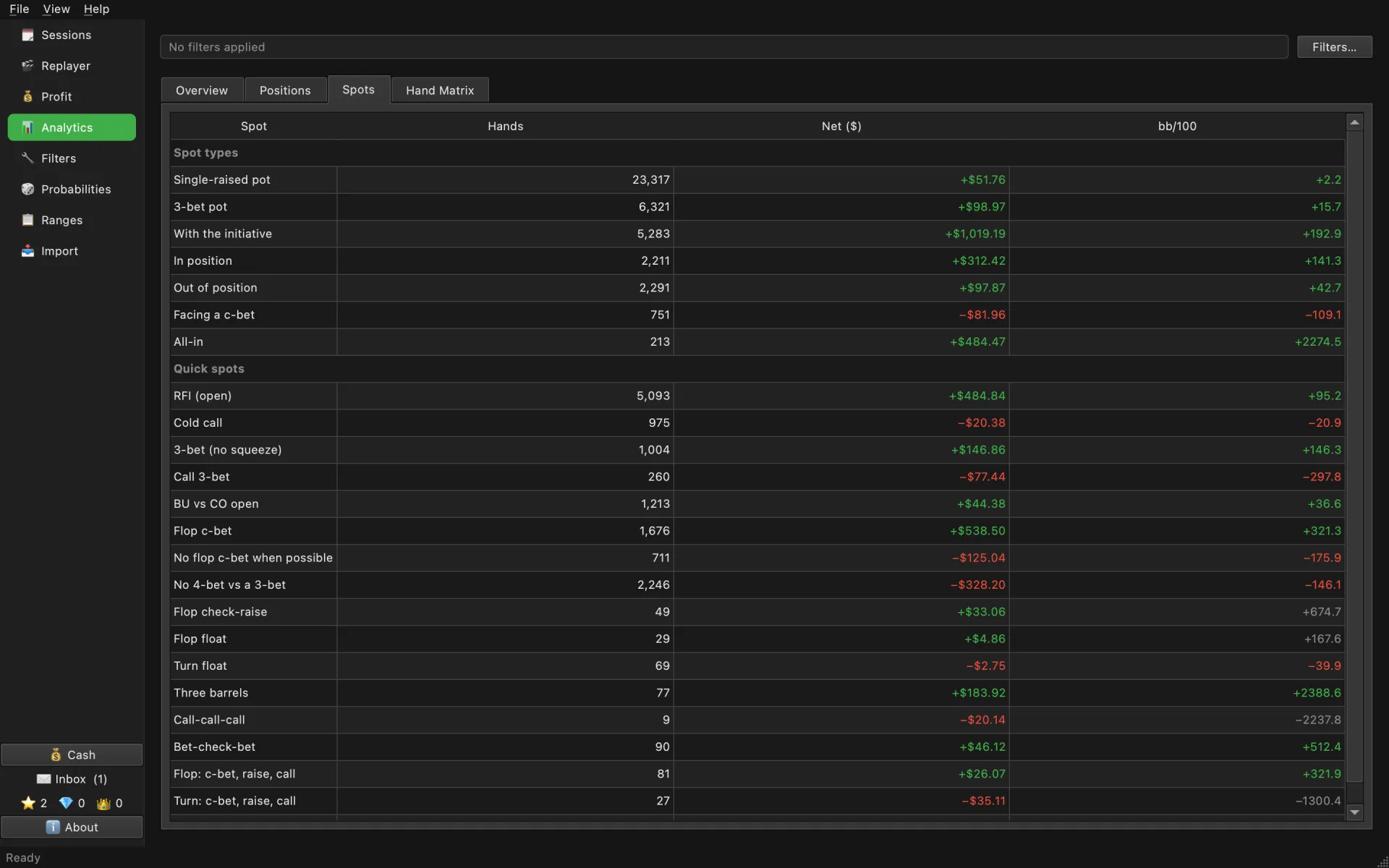
In cash the table has a Net ($) column; in tournaments it does not. Grey numbers read the same as on Positions: the sample is still small.
→ See also: Quick Spots, Cash Game Analysis.